Unlocked vs. Carrier Phone: Band Support, Bloatware, and 2026 Unlock Rules
Compare factory-unlocked and carrier phones, check hardware separately from SIM locks, and review Verizon, AT&T and T-Mobile eligibility conditions.
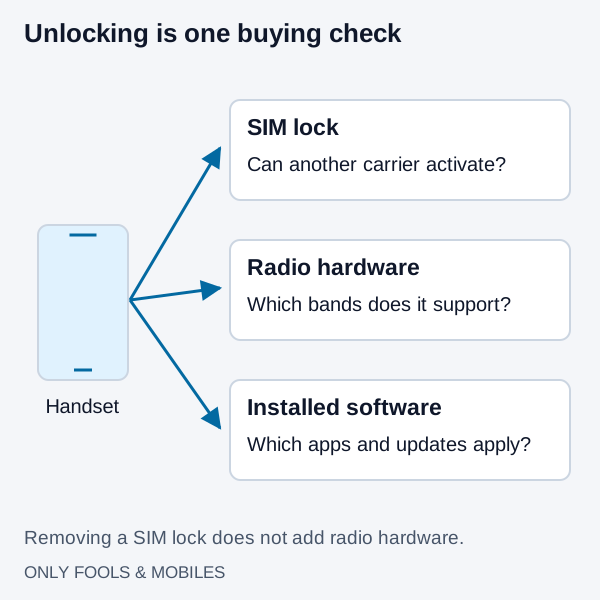
A factory-unlocked phone is sold without a carrier SIM restriction. A carrier phone may start locked and become unlocked after its provider’s requirements are met. Unlocking changes that restriction; it does not necessarily change installed apps, firmware, radio support or eligibility on another network.
Use the budget unlocked buying guide to compare total cost and remaining software support.
Separate lock, hardware and software
| Question | What to verify |
|---|---|
| Can I activate another carrier? | SIM lock status, exact model and the receiving carrier’s compatibility result |
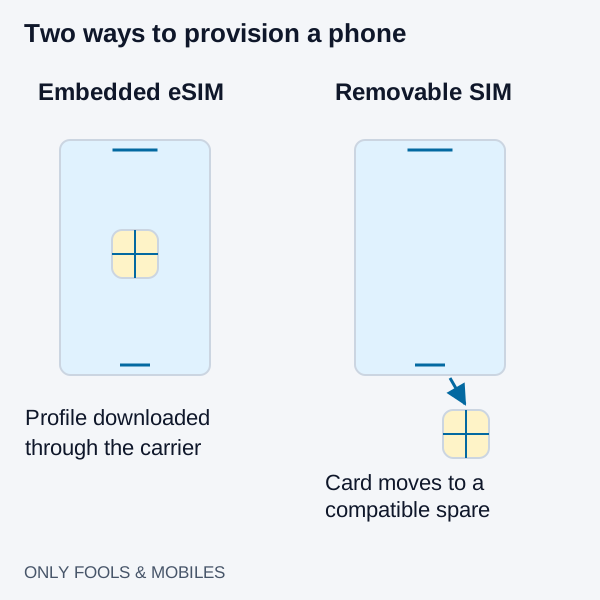
| Will travel eSIM work? | Model’s eSIM support, unlocked status and provider activation requirements |
| Will carrier apps disappear? | Do not assume an unlock removes installed software |
| Will updates arrive sooner? | Check the OEM’s model-specific support policy; unlocked does not guarantee faster rollout |
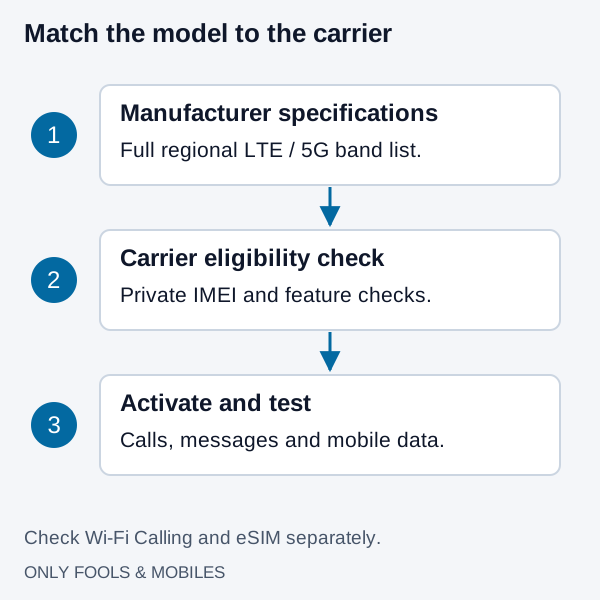
| Does an imported model have the same bands? | Compare full regional specifications, not just the product name |
Samsung model suffixes can help identify a variant, but a suffix is not a universal compatibility or “zero bloatware” certificate. Likewise, a US retail phone does not automatically include every mmWave band. The FCC’s unlocking FAQ explains why an unlocked device may still be incompatible with another network.
For unwanted apps, use Uninstall or Disable where the manufacturer offers it. Do not disable unfamiliar system, calling or security components. For a known nonessential app with excessive background activity, see the Android battery guide.
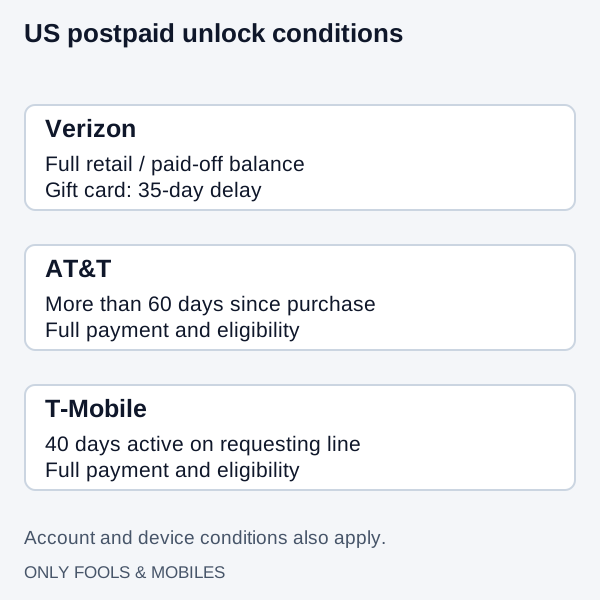
US carrier policy checks, reviewed October 25, 2026
Policies depend on the purchase, account and device. Use the carrier’s current page and confirm eligibility for the particular phone; no one waiting period covers every US carrier.
Verizon: Its policy effective February 18, 2026 says postpaid devices unlock when purchased at full retail or when financing is paid off. Immediate unlocking requires a secure payment method; a Verizon Gift Card purchase or payoff has a 35-day delay. Lost/stolen restrictions apply. Prepaid devices require 365 days of paid and active service. The policy has separate business and deployed-military provisions.
AT&T: Its Wireless requirements include purchase more than 60 days ago, full payment, no lost/stolen/fraud report, no active use on another AT&T account and a current bill for existing customers. A noncustomer can request unlocking if the device meets the requirements. Check the separate Prepaid requirements rather than assuming the Wireless timing applies. Eligible supported devices may unlock automatically.
T-Mobile: Postpaid requires at least 40 days active on the requesting line, full payment and account eligibility. Prepaid generally requires 365 days since activation; the alternative requires more than $100 in refills per active line during the applicable period and more than 14 days since purchase. The two-unlocks-per-line limit in 12 months also applies to prepaid. Automatic unlocking within two business days applies to devices that support remote unlock; others receive next-step instructions. Lost/stolen/blocked restrictions and other conditions apply.
A 36-month credit offer is not the same as an unlocked price
Compare the retail handset balance, service cost, trade-in value and credits you will actually receive. Check what happens if you leave, change plans or pay off early. An installment term does not by itself tell you the SIM-unlock date. If you compare costs at month 24, include any outstanding obligation from the longer agreement.
Confirm a used phone before paying
On iPhone, Settings → General → About → Carrier Lock should show No SIM restrictions for an unlocked device. Android status menus vary; use the original carrier’s model-specific instructions or account tools. AT&T distinguishes Samsung models released before and after September 1, 2025, so one menu path does not fit every Galaxy or Pixel.
Ask the receiving carrier to check the actual IMEI privately. Where possible, test the intended SIM or eSIM and calls, messages and data during the return period. This checks current behavior, not a guarantee against a future account-related block. Keep proof of purchase and a clear return remedy. For travel, review eSIM switching and recovery before transferring your main number.
Related technical guides
eSIM vs. Physical SIM Card: Carrier Switching, Roaming, and Theft Security
Compare eSIM and physical SIM for travel, broken-phone recovery and theft protection, with carrier-specific activation and roaming checks.
Read technical guide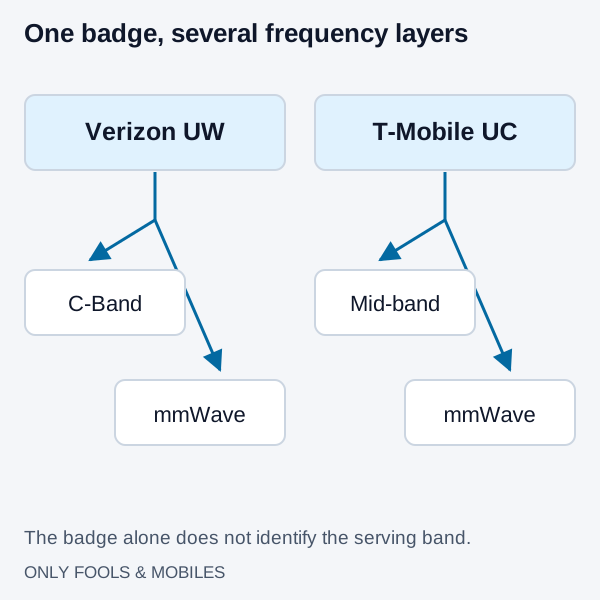
5G UW vs. 5G UC: mmWave, C-Band Frequency, and Battery Drain Explained
Understand Verizon 5G UW and T-Mobile 5G UC, mid-band versus mmWave coverage, and how iPhone 5G Auto changes network selection.
Read technical guide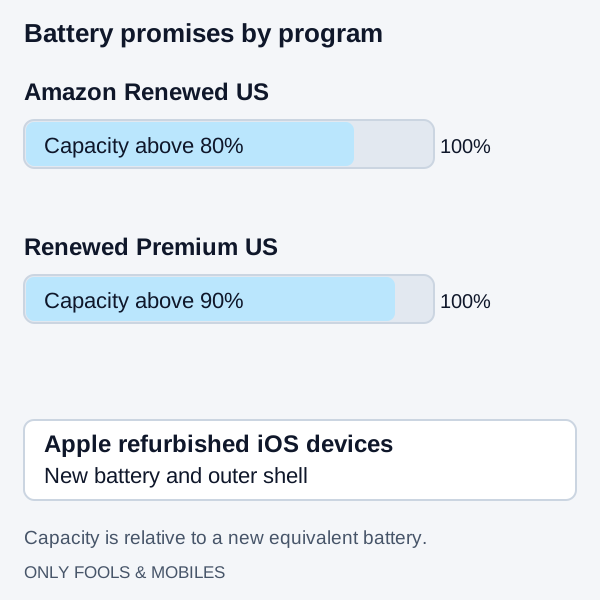
Amazon Renewed vs. Refurbished: Grading, Battery Health, and Warranty Compared
Compare Apple refurbished iOS devices with Amazon Renewed US battery, parts and cosmetic rules, then use a first-30-minute delivery checklist.
Read technical guide